Mike McGarvin
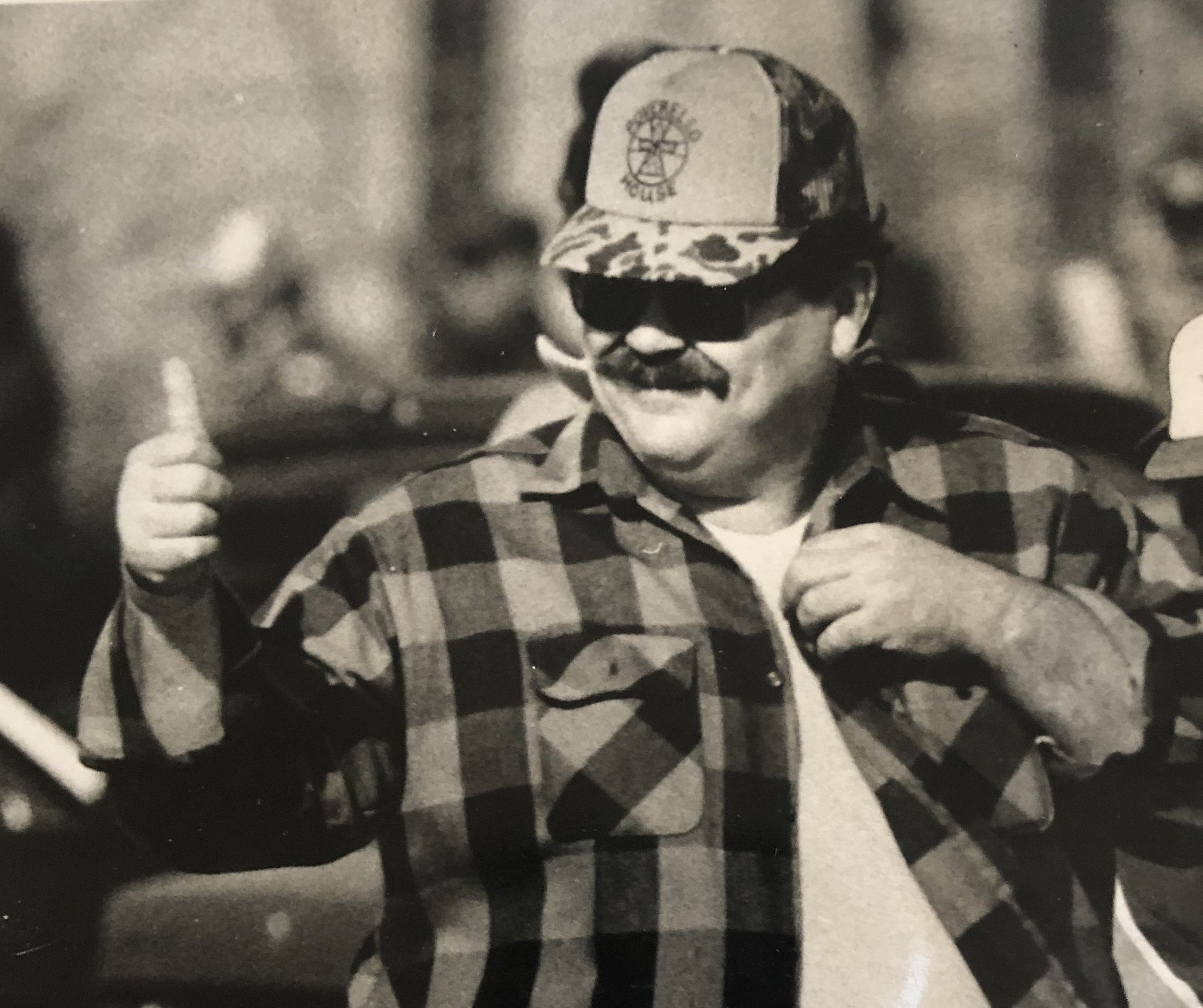
Mike McGarvin opened eyes, hearts and wallets to serve the Valley’s needy
“For it is in giving that we receive,
it is in pardoning that we are pardoned.”
By John G. Taylor
The sun clocked out after another bleaching of downtown warehouses and trucking docks neighboring the heat-absorbing, light-emitting sprawl that was the Fresno Bee headquarters on E Street.
Here, the final fragrant leftovers from Fish Fry Friday were being interred in the cafeteria fridge for three days till Monday night resurrection as fish tacos.
What fresh hell have I bought into, I might have asked myself. But Michael Lee McGarvin intervened, saying hello with his fork and waving me to his table, two solitary diners joined in the bowels of a major daily newspaper in what this newbie would learn was merely another dispiritingly torrid Central Valley summer.
Mike – it would always be just Mike – was no gregarious glad-hander. A burly man with a warm smile and sizing-you-up eyes, he was easy to know.
Key intros: I edited the words. He got them into ink.
Our workdays started at 4 or 5 p.m. while 900 other Bee employees libated at home as TVs blared the nightly news.
Mike and I shared vagabond’s blood, both looking to set our roots.
In my nine years of job hopping, I’d gone from New York University journalism grad to copy editing jobs in Connecticut and Milwaukee – brainlessly moving there in the winter of 1976 -- where our daughter arrived. I’d now just driven a snow-tired, Wisconsin rust bucket into Fresno – brainlessly moving there in summer of 1981 -- a few months before our son’s debut.
Seven years older, Mike had his own tire wear.
Alcoholic father, run-ins with the cops, college football, National Guard, trained as a photoengraver, San Francisco drug and alcohol abuser/street ruffian in the wild Sixties, salvation coming when he discovered the Poverello Coffeehouse in the Tenderloin, run by a Franciscan priest.
He ditched drugs, became a Catholic and a part-time “bouncer for Jesus” as he volunteered with the needy for years. He met and married Mary and moved their family to Fresno, working nightside a floor or two away from me.
He had a dayside gig, too, a few blocks from the Bee, handing out water and homemade sandwiches to street people, listening to their torments.
Soon the night came when he floored me.
Said Mike: I think we’ve figured out how to make it work, Mary and me. The kids are the right ages. I can’t keep working here full time while helping the needy. It’s too much.
I’m quitting the Bee.
With that, Mike went from sidelines to headlines. From do-gooder working out of a car trunk to opening a storefront in Fresno’s hardscrabble Chinatown, that’s how Mike’s 1970s morphed into the 1980s.
We’d get reacquainted in the late 1980s when I ditched editing and returned to daily reporting, from religion to healthcare, as “Pappa Mike’s” Poverello House grew and struggled to survive.
There were fires, drive-by shootings, street closures and, always, surging numbers of needy served by Poverello and the nearby Fresno Rescue Mission.
As I told Bee readers: “Mike is a Goliath of a man with a black belt in judo. But he disarms people more with his smile than his size.”
Mike described the daily rollercoaster:
“The best experience has been to feed the thousands of meals a day and see the joy in the faces of those we were there to serve.
“The worst experience was seeing the face of a little girl who was serving a tray to a man. She put her head down and I thought she was tired. I asked if she want to sit down and she looked up with a tear in her eye and said, ‘I just fed my father.’”
I never witnessed him break up a street fight, stitch a gash or persuade the unlucky and unfriendly that Jesus Christ loves them and that rehab might help.
I’d begin: “How are you doing today, Mike?” He’d reply: “Keeping in beans and stitches.”
We never had a heavy “God talk.” Staying afloat always relied on endless “to do’s.” That might explain why we never talked twice in the same location.
We met in a near-empty refrigerated building that was on the fritz. At a modular rehab center for substance abusers. And alongside “Mama Mary,” in the living room of an ancient home near the Pov temporarily reclaimed as the McGarvins’ home. Its yard had a wooden tower where a Vietnam vet kept watch, presumably safeguarding his benefactors.
Mike knew his limits, surrendering daily operations to hired professionals and skilled volunteers overseen by a board of community leaders and benefactors.
For a couple of years, the Pov’s resources included an annual Christmas family fund-raiser established by Dr. Edythe Eymann of Reedley, my mother-in-law.
Mike took the roles of founder/fellowship director, walking the streets, greeting and encouraging. A talented photographer and parable writer, the onetime Bay-area brigand was a Smoky the Bear-sized peacemaker.
The web says the Pov now serves 2,600 meals a day while providing temporary shelter, free medical and dental care, drug rehabilitation, hygiene services, social services and clothing. And resources are still tight.
Mike last touched my heart in a letter when I left the Bee in 2001 after 20 years to become a hospital communicator.
“I always appreciated your accuracy, your thoughtfulness and your creativity,” he said. “Thank you for being a friend of the Pov, John.”
Tellingly, he said this about my new job: “I hope it’s rewarding and less pressure.”
Trying to see life through the eyes of others says plenty about Mike, who left us in 2017 at age 73.
Mike was cut from the same cloth as St. Francis of Assisi, becoming a Secular Franciscan, a fraternity committed to prayer, simplicity and service, following the example of St. Francis, whose hallmark prayer gave us: “For it is in giving that we receive, it is in pardoning that we are pardoned.”
Embracing every stranger, like that newsroom vagabond in a mucky cafeteria. That was brother Mike.
If you’d like to reach me, email: jtcommunicates@comcast.net